Thursday, May 25, 2006

Well, they blew up C-8 in Asbury last month ...


... and it only took 17 years.

For Shore residents, the unfinished structure called C-8 that loomed over Asbury Park's beachfront had become something of a local landmark. A high-rise condo project that went unfinished after its developers went bankrupt in 1989, the skeletal 12-story building had become a symbol of Asbury's failed redevelopment. Readers of THE BARBED-WIRE KISS will note that I used C-8 as the setting for the climactic scene in the novel, and at the time (2002) I was concerned the building would be demolished before the book came out. Well, obviously I didn't need to worry.

The end finally came on April 29, 2006, when a demolitions team imploded the structure to make way for a new condo development, part of Asbury's master plan for revitalizing the oceanfront. Will the Wonder Bar be next?

(Photo by Jackie Fritsche)

Tuesday, May 09, 2006

Fun with French


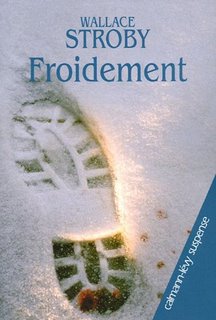
Recently received my author copies of the French version of HEARTBREAK LOUNGE (retitled FROIDEMENT, or COLDLY) and again Calmann-Levy did a beautiful job with the book, with (as far as I can tell, not reading much French) another great Florence Mortimer translation and a totally re-envisioned - and very evocative - cover.

However, it's always fun to run the jacket copy through an automatic - and strictly literal - internet translator. Below is the translated jacket copy for FROIDEMENT:

"The ex-cop Harry Rane meets one day of winter, in the small city of the New Jersey where he officiates as private detective, Nikki Ellis, a thrown into a panic young woman who research of the assistance: his/her former companion, Johnny Harrow, have been just released after having purged a seven years sorrow of criminal reclusion for murder. Nikki knows what it is able. It also knows that he will seek to find it, and especially to find their child, that it gave up with its birth and who was adopted.
In fact, Johnny, an intelligent man that the clink completely dehumanized, begins his trâque in Heartbreak Lounge, a cabaret where Nikki was a dancer. From there, it goes up the track which leads to its ex. For Johnny, revenge is a dish which is eaten cold, very cold. It only the guide - against its former owner, the caïd Joey Risk, counters his former accomplices who balanced it, counters the police force and the legal institution which believe capacity to handle it, and counters his/her former partner, culprit “to have given his son to the unknown ones”. All will have repentance to be had one day betrayed or underestimated Johnny Harrow, who eliminates them like one empties an ashtray - coldly.
Will Harry Rane be rather strong - or rather unconscious - to face such a machine to be killed?"

Poetry!

Friday, April 14, 2006

The Judas kiss


Martin Scorsese’s 1988 film THE LAST TEMPTATION OF CHRIST can be tedious to watch, but it’s a lot of fun to talk about. As slow as it is at times (and as anachronistically funny as it seems at others), it’s a movie rich with ideas, some of them deeply moving. As a product of 12 years of Catholic school (and countless ponderous Biblical epics), I find Scorsese’s revisioning of the Gospels (and of Nikos Kazantzakis’ 1951 novel) both exciting and ultimately affirming, though my allegiance to the faith has long since lapsed. After all, how many films ever addressed the duality of Christ, or His struggle to accept the burden of becoming the Savior?
What fascinates me most though is the depiction of Judas — perhaps the most reviled figure in history — as hero. Though Harvey Keitel’s accent sounded more Greenpoint than Galilee, he gave Judas a certain gruff, angry and determined quality that seemed right emotionally, if not always grammatically. He berates Jesus for building crosses for the Romans, threatens to kill him if he fails in his ministry and eventually sacrifices all he believes in to betray Jesus — at his request — and thus bring about the Crucifixion and Resurrection. "Could you betray God?" Judas asks Willem Dafoe’s Christ. "If you were me, could you betray your Master?" "No," Jesus answers. "That’s why God gave me the easier job ... to be crucified." All I have to do is die, Jesus seems to be saying. But you have to live with yourself.
All of this came back to me last week with the National Geographic Society’s unveiling of the Gospel of Judas, a nearly 2,000-year-old document that’s purportedly based on one-on-one conversations between the two. In it, Judas is said to have "exceeded" the other Apostles in his dedication to Christ, is the only one aware of his true identity as the Son of God, and betrays his Master only after Jesus convinces him it must be done. "Step away from the others and I shall tell you the mysteries of the kingdom," Jesus says. "It is possible for you to reach it, but you will grieve a great deal."
And in LAST TEMPTATION at least, grieve Judas does, giving up One he loves to those he hates, as part of a big picture he can only vaguely understand. "I have a terrible secret from God," Jesus tells him at one point. "Judas, I am the lamb. I’m the one who’s going to die."
"I won’t let you die," Judas insists.
"You don’t have a choice," Jesus answers. "Neither do I. Remember, we’re bringing God and man together. They’ll never be together unless I die. I’m the sacrifice.... Forget everything else, understand that."
Judas also plays a crucial role in the scene that gives the film (and novel) its title. Suffering on the cross, Jesus is greeted by the image of a young girl who claims to come from God. Like a benevolent Ghost of Christmas Future, she ushers him down, heals his wounds and shows him an alternate life in which he rejects his divinity, marries Mary Magdalene, has children and happily lives to a ripe old age. But it is Judas who confronts him on his death bed. "Traitor," Judas calls him. "Your place was on the cross. ... you broke my heart ... I loved you so much I went and betrayed you. But what business do you have here? With women, with children... Why weren’t you crucified? If you die this way, you die like a man... you deny God. Then there’s no sacrifice. Then there’s no salvation."
Shamed and repentant, Jesus begs his Father to allow him to return to the cross. His life as a man has been a dream, a final temptation he’s resisted — with Judas’ help. He looks to Heaven and gives up his life as he utters his final words: "It is accomplished."
This imagining of Jesus’s last hours may not be good theology, or even good cinema. And Sister Helen would certainly not have approved. But it adds a weight and complexity to the story that makes it seem all the more real, more transcendent. That whisks it away from dogma and doctrine into something both identifiable and immediate, emotionally true and, in its way, more inspiring than ever.